
Local SEO: How to Get Your Business Found by Customers Near You
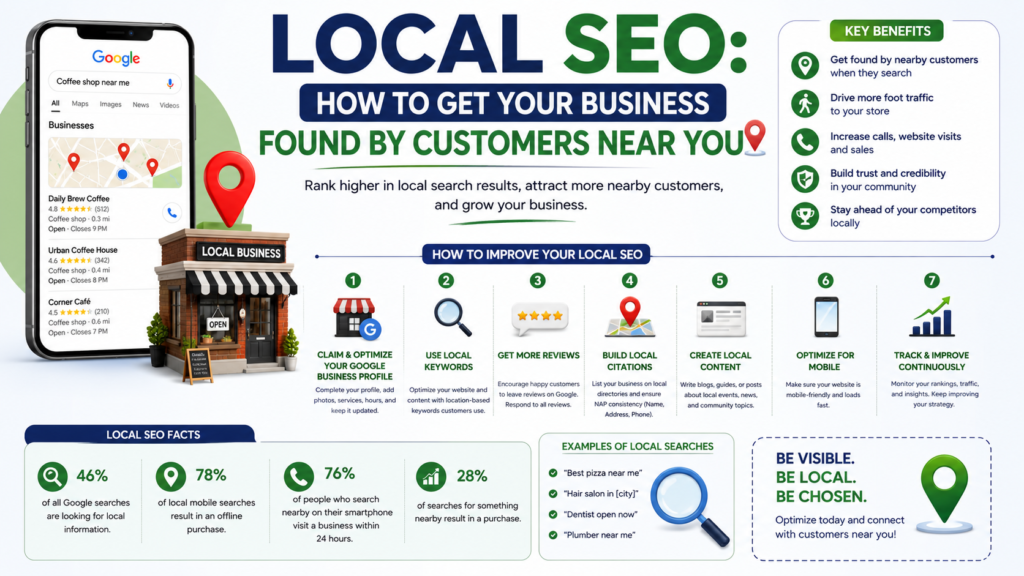
If you run a local business, a restaurant, a dental clinic, a law firm, a home services company, then local SEO is the most powerful digital marketing tool you have access to. Local SEO is the process of optimizing your online presence so that your business appears when people in your area search for the services you offer.
This guide explains exactly how local SEO works and the practical steps you can take to dominate your local market.
What Is Local SEO and How Is It Different from Regular SEO?
Regular SEO aims to rank your website for searches happening anywhere in the world or across a broad region. Local SEO specifically targets searches made by people in your geographic area, or searches that include a location like ‘dentist in Chicago’ or ‘pizza near me’.
Local search results often show a special ‘map pack’ at the top of Google results, a map with three local businesses highlighted. Ranking in this map pack can dramatically increase your phone calls and foot traffic.
Step 1: Claim and Optimize Your Google Business Profile
Your Google Business Profile (formerly Google My Business) is the cornerstone of local SEO. This is the information card that appears on the right side of Google results when someone searches for your business, and it determines whether you appear in the map pack.
To optimize it: make sure your business name, address, and phone number are completely accurate, A fully optimized business profile significantly improves local visibility. Professional Search Engine Optimization Services can help maximize your rankings.
Step 2: Get Consistent NAP Citations
NAP stands for Name, Address, Phone Number. Google uses these data points to verify your business information. It is critical that your NAP is identical across every online directory, your website, Google Business Profile, Yelp, Facebook, TripAdvisor, industry directories, and everywhere else.
Even small inconsistencies (like ‘Street’ vs ‘St.’) can confuse Google and hurt your local rankings.
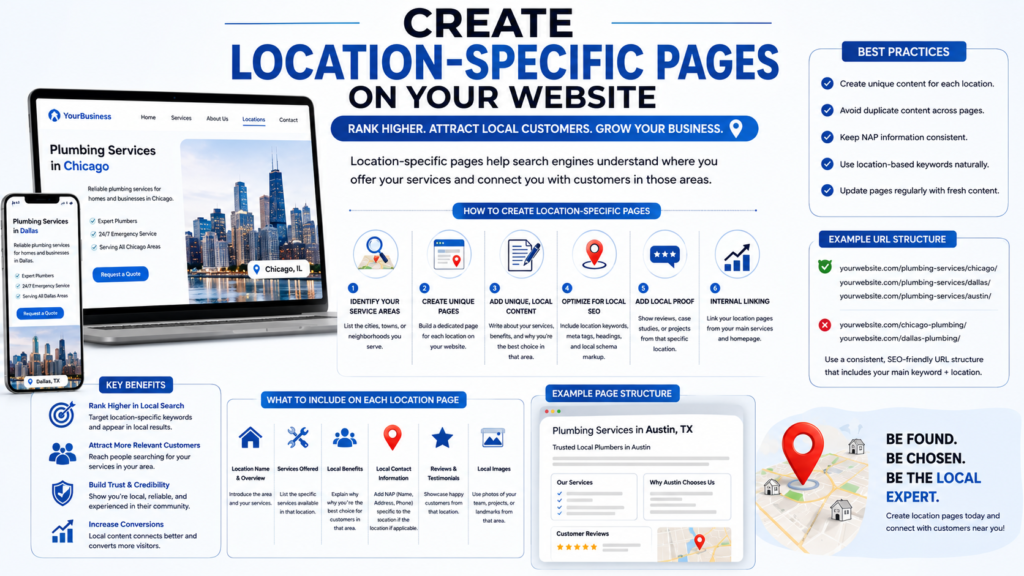
Step 3: Create Location-Specific Pages on Your Website
If you serve multiple neighborhoods or cities, create a dedicated page for each location. Each page should include location-specific content, not just the same content with the city name swapped. Mention local landmarks, use location-specific testimonials, and embed a Google Map.
Step 4: Earn Local Backlinks
Links from local news websites, local business associations, chambers of commerce, and other local organizations are extremely valuable for local SEO. High-authority backlinks remain one of the strongest ranking signals. Strategic Guest Posting Services can help build quality backlinks faster.
Step 5: Collect and Respond to Google Reviews
Reviews are a massive local SEO factor. Businesses with more positive, recent reviews rank higher in local results. More importantly, they convert better, potential customers trust businesses with strong review profiles.
Ask happy customers to leave a Google review. Respond to every review, positive and negative, professionally. This shows Google and potential customers that you are an engaged, trustworthy business.
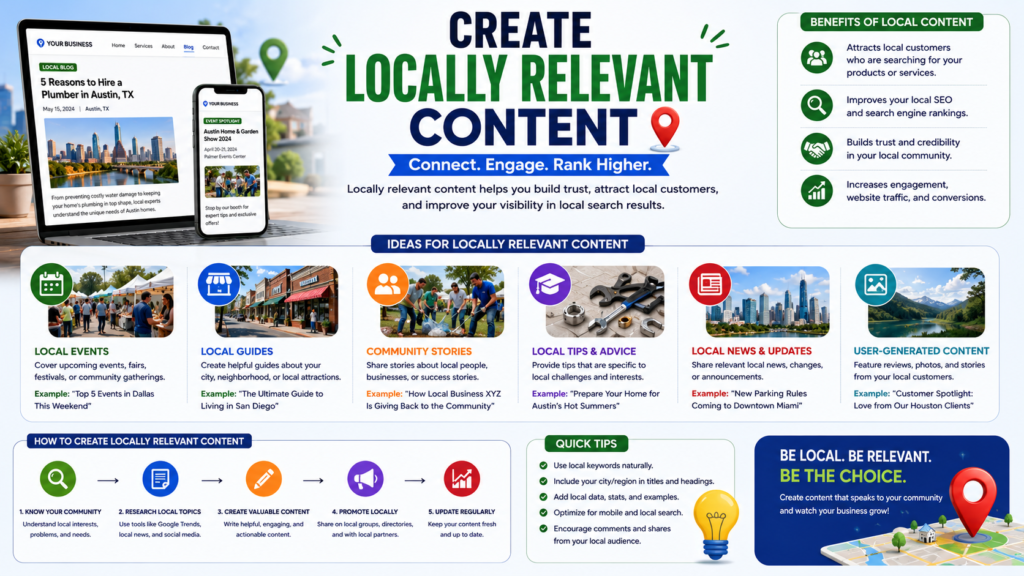
Step 6: Create Locally Relevant Content
Write blog posts that address topics relevant to your local audience. A plumber in Denver could write about ‘How Denver’s hard water affects your pipes’. A restaurant in Austin could write about ‘Our favorite local ingredients and where we source them’. Publishing high-quality local content consistently is essential for better rankings. Expert Content Writing Services can help create SEO-focused content.
Measuring Your Local SEO Success
Track your map pack rankings for your key local search terms. Monitor phone calls and direction requests from your Google Business Profile. Check your organic traffic from location-specific searches. These metrics will show you whether your local SEO strategy is working.
Frequently Asked Questions About Local SEO
Q1: How long does local SEO take to show results?
Local SEO typically shows results faster than broader national SEO. Many businesses see meaningful improvement in two to four months. Competitive markets take longer.
Q2: Do I need a physical address for local SEO?
Having a physical address you can list on Google Business Profile is important. If you are a service-area business, you can list your service areas instead of a physical address.
Q3: Can social media help with local SEO?
Indirectly, yes. Social media helps build brand awareness and can drive traffic to your website. Active social profiles with your correct NAP information also create consistent citations that support local SEO.
Q4: What is the most important local SEO factor?
Your Google Business Profile optimization and the quantity and quality of your Google reviews are consistently the most impactful local SEO factors.
Q5: Does my website need to be optimized for local SEO too?
Absolutely. Your website needs location-specific pages, local schema markup, and fast load times to support your local ranking efforts. Contact Sky Rocket Rankings to audit and optimize your website.
