
Technical SEO: The Behind-the-Scenes Work That Makes or Breaks Your Rankings
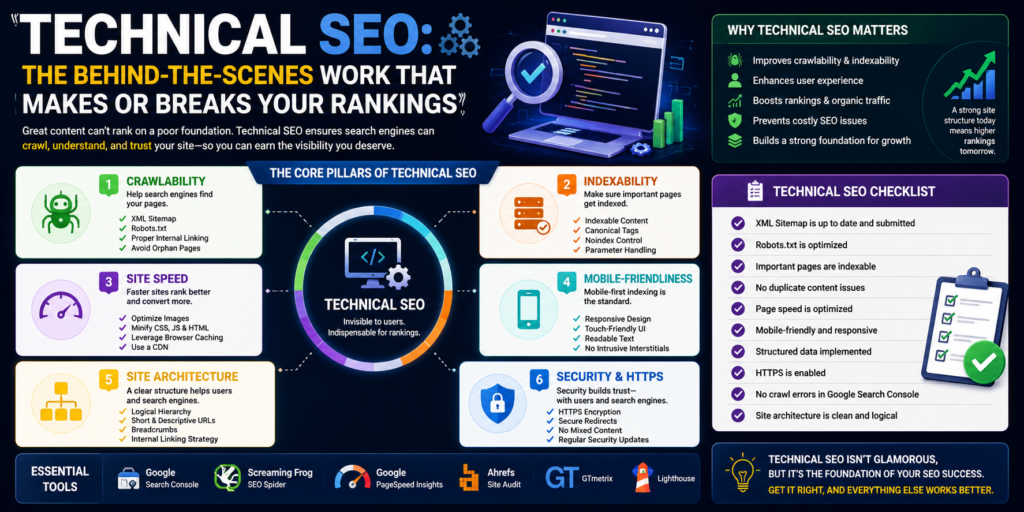
Most people understand that SEO involves keywords and content. Fewer people understand that beneath every high-ranking website is a layer of technical optimization that makes everything else work. Technical SEO is the foundation. Get it wrong, and no amount of great content or backlinks will push you to the top of Google.
This guide explains what technical SEO is, why it matters, and what the most important technical factors are that every website owner should know about.
What Is Technical SEO?
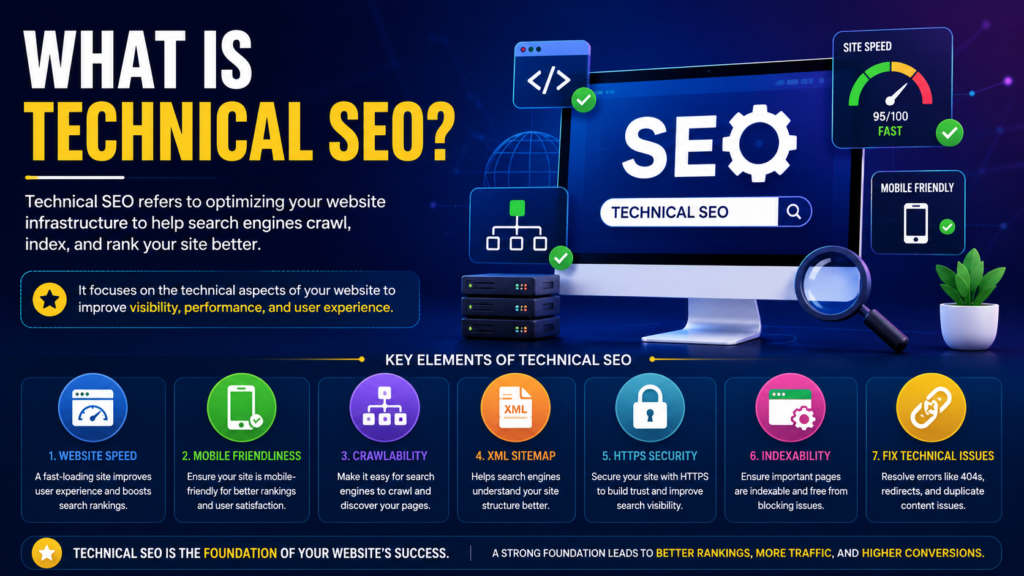
Technical SEO refers to the process of optimizing the infrastructure of your website, the code, architecture, and server-level elements that affect how search engines crawl, index, and rank your pages.
While on-page SEO focuses on content and off-page SEO focuses on links, technical SEO focuses on making sure your website is structured in a way that Google can easily read, understand, and trust.
Technical SEO is one of the most important pillars of successful Search Engine Optimization Services, ensuring your website is fully optimized for crawling, indexing, and ranking.
Why Technical SEO Matters So Much
Think of it this way: your content is the message, and technical SEO is the delivery system. You could have the most valuable, expertly written content in the world, but if your website loads in eight seconds, has broken links, or has duplicate content confusing Google, your pages will not rank where they should.
Even with strong technical SEO, quality content remains essential. Professional Content Writing Services help ensure your pages provide value, relevance, and keyword-focused information for users and search engines.
Core Technical SEO Factors
1. Site Speed
Page load time is a confirmed Google ranking factor. Google’s Core Web Vitals update made speed an official part of the ranking algorithm. Aim for a Largest Contentful Paint (LCP) of under 2.5 seconds. Tools like GTmetrix and Google PageSpeed Insights give you a free analysis.
2. Mobile-First Indexing
Google primarily uses the mobile version of your website for indexing and ranking. If your site is not mobile-responsive, it will struggle to rank regardless of its desktop experience.
3. HTTPS Security
Google marks non-HTTPS sites as ‘not secure’ and uses HTTPS as a ranking signal. Every website must have a valid SSL certificate installed. This is non-negotiable.
A technically strong website starts with solid Web Development Services. Proper coding, responsive design, and clean architecture all directly support better SEO performance.
4. XML Sitemap
An XML sitemap is a file that lists all the pages on your website and tells Google about their structure and priority. Submitting your sitemap to Google Search Console helps Google discover and index your pages faster.
5. Robots.txt
This file tells search engine crawlers which pages to crawl and which to ignore. Incorrect robots.txt configurations can accidentally block Google from crawling your most important pages, a devastating and surprisingly common mistake.
6. Canonical Tags
If you have multiple pages with similar or identical content, canonical tags tell Google which version is the ‘master’ page to index. Without them, Google may split your ranking power between duplicate pages.
7. Structured Data (Schema Markup)
Schema markup is code you add to your website that helps Google understand the context of your content. It can enable rich results, like star ratings, FAQs, and product information, directly in search results, dramatically improving click-through rates.
How to Conduct a Basic Technical SEO Audit
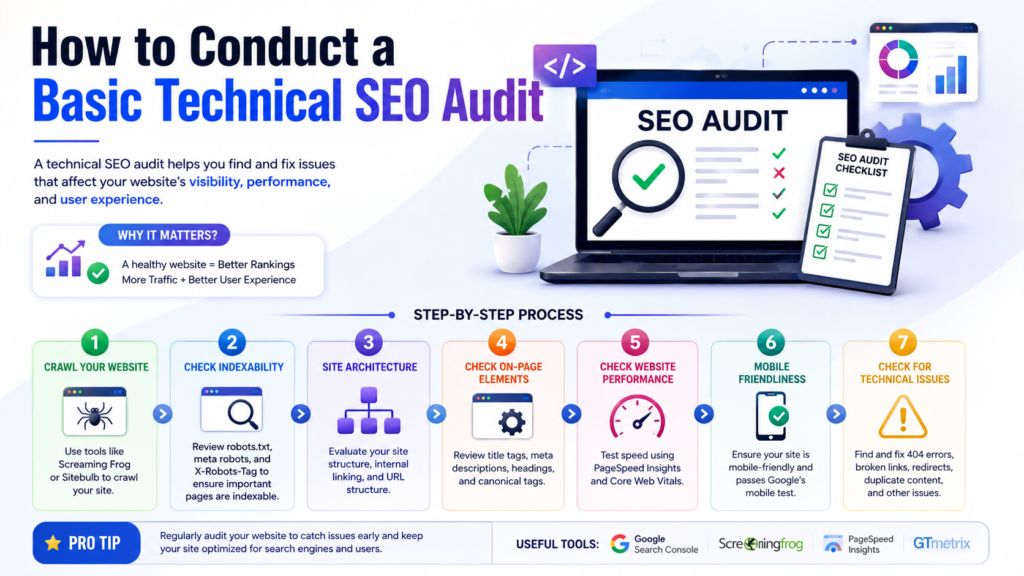
Start by running your website through Google Search Console, it is free and will flag indexing errors, mobile usability issues, and Core Web Vitals problems directly. Tools like Screaming Frog can crawl your entire site and identify broken links, duplicate content, missing meta tags, and redirect chains.
When to Get Professional Technical SEO Help
Technical SEO can get complex quickly. Issues like JavaScript rendering problems, hreflang for multilingual sites, log file analysis, or resolving complex redirect structures often require professional expertise.
At Sky Rocket Rankings, every SEO engagement starts with a comprehensive technical SEO audit to identify and fix these issues before we focus on content and link building. Our technical SEO work ensures that all the other SEO investments produce maximum results.
Frequently Asked Questions
Q1: How do I check if my website has technical SEO issues?
Start with Google Search Console (free) and Google PageSpeed Insights (free). These tools will surface the most impactful issues to address first.
Q2: How often should I do a technical SEO audit?
At minimum, once every six months. If you are actively publishing content, making site changes, or running campaigns, quarterly audits are better.
Q3: Can technical SEO issues cause a sudden drop in rankings?
Yes. A poorly configured robots.txt file, an accidental noindex tag, or a faulty redirect can cause overnight ranking drops. This is why regular monitoring is essential.
Q4: Is technical SEO a one-time task?
No. Websites evolve, new pages are added, plugins are updated, and Google’s algorithm changes. Technical SEO is an ongoing maintenance task.
Q5: Does technical SEO affect user experience?
Absolutely. Faster sites, secure connections, and well-structured navigation all directly improve the experience for your human visitors, not just search engines.
